Guiding the Way: Reflections from a Mantle Journey – The Invitation
Me mātau ki te whetū, i mua i te kōkiri o te haere.
Before you set forth on a journey, be sure you know the stars.
The first day I stepped into Ruaumoko, our New Entrant classroom, I was a little nervous.
There were plenty of unknowns. While I had experience teaching through Mantle of the Expert, I had never taught a unit like this with five-year-olds before. I was unsure how they would respond to the imagined context, whether they would engage with the story, and how much support they would need along the way.
As soon as I entered the room, however, a feeling of relief washed over me. In front of me were fifteen curious and enthusiastic tamariki, ready to learn. Credit must go to their classroom teacher, who had established wonderful routines and a calm classroom culture that made it easy to settle in.
Although my plan was to officially introduce the Mantle after morning tea, I wanted to spend some time building the world first.
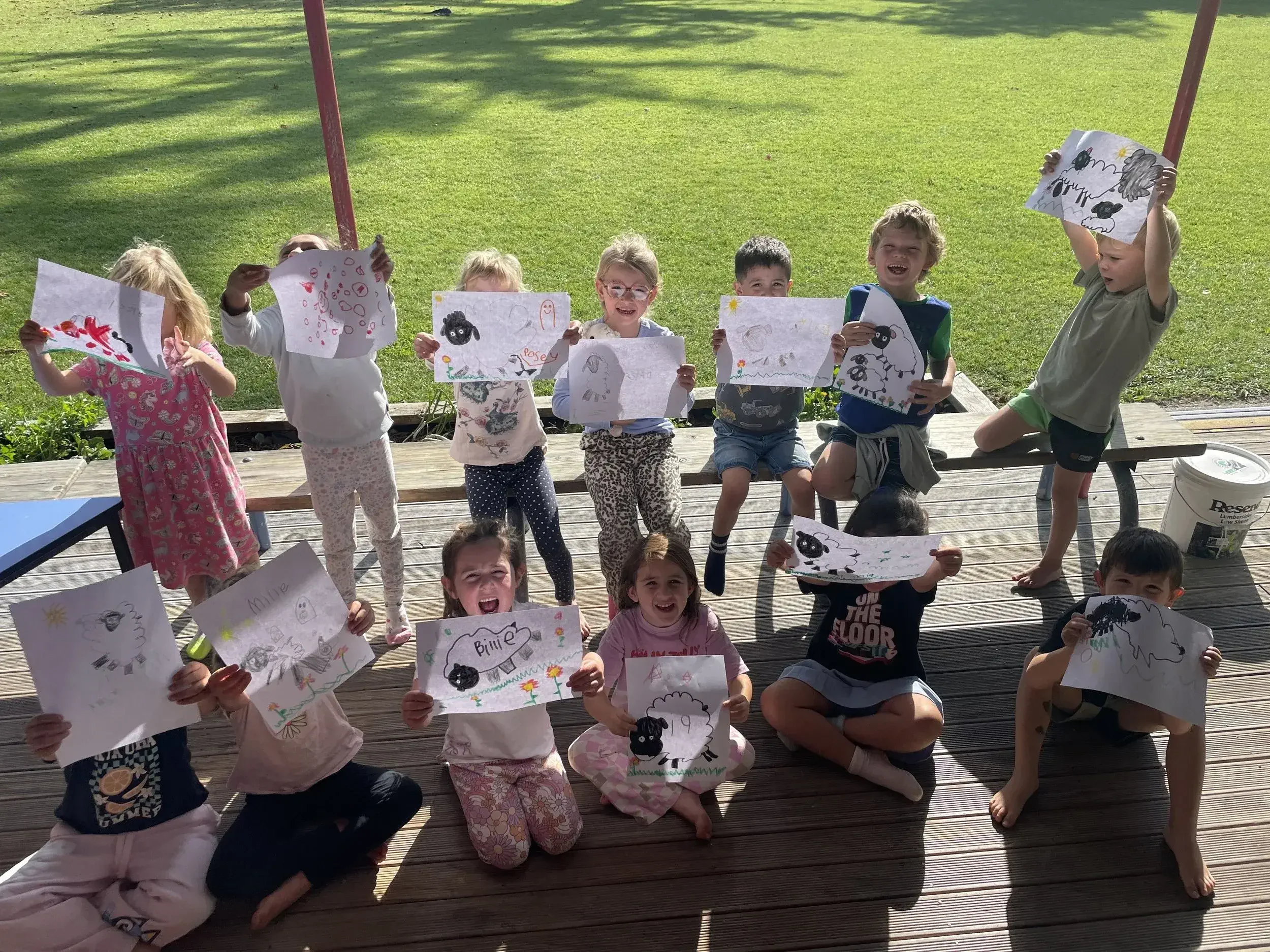
During our first learning block, we read Sheep in a Jeep by Nancy E. Shaw. It is a short but adventurous story about a group of mischievous sheep who seem to find trouble wherever they go.
As we read, I used a Drama for Learning strategy called Let's All Be... Plus. Rather than simply listening to the story, the children were invited to step into it.
Looking at the cover, I asked:
"Let's all be the sheep in the jeep... plus where are we going today?"
When the jeep broke down:
"Let's all be the sheep fixing the jeep... plus how are you fixing it?"
When the jeep became stuck in the mud:
"Let's all be stuck in the mud... plus how do we feel? What could we do to solve the problem?"
The invitations were playful, simple, and imaginative. They allowed the children to physically and emotionally connect with the story while also beginning to think about problems and solutions.
By the end of the book, we had reached an important conclusion.
The sheep were adventurous.
The sheep were clumsy.
And perhaps most importantly, the sheep often did not know where they were going.
Without realising it, the children had helped create the perfect entry point into our Mantle.
After morning tea, it was time for the official invitation.
Waiting in the classroom was a sheep with a note attached:
"This sheep has travelled a long way, and he has a problem.
He keeps getting lost.
He does not yet understand this place—where things are, how to move around, or how to find what he needs.
He needs your help."
Immediately, the children were hooked.
They quickly decided that our sheep must have been one of the sheep from the story we had read earlier. They began constructing a backstory, imagining how he had become separated from his friends and travelled all this way on his own.
What struck me most was how quickly they responded with empathy.
They felt sorry for him.
They worried about him.
They wanted to help.
Before we had even mentioned maps, the children had already accepted the invitation.
I asked them how we could be kind to the sheep.
The usual responses emerged first:
"Be his friend."
"Play with him."
"Say nice things to him."
I kept probing.
We knew from the story that sheep were a little clumsy and often got lost. How could we help with that?
Eventually, one child suggested:
"We could show him where to go."
And there it was.
The doorway into our learning.
Together, we identified all the important places our sheep might need to know about in the classroom: the books, the toys, the mat, the teaching table, the pens, and the television. We drew pictures of each place and arranged them on the floor to create a shared map of our classroom.
As we worked, opportunities for mathematical and geographical language emerged naturally.
How many steps does it take to get there?
Should we turn left or right?
What is near?
What is far away?
What landmarks might help the sheep find his way?
What had begun as an act of kindness was becoming an exploration of mapping and spatial awareness.
The children were completely invested.
In fact, they were so engrossed in the task that the lunch bell seemed to arrive unexpectedly. One moment we were discussing directions and landmarks; the next it was time to pack up.
Looking back, one of my biggest lessons from this first session was that the maps were not what captured the children's attention.
The sheep did.
Looking back, I think this was the moment I was reminded why I enjoy teaching through Mantle of the Expert. The children were not making a map because it was on my planning. They were making a map because they genuinely wanted to help our sheep find his way.
And just like that, the Makaraka Map Makers had begun their work.